














LINTICO Journal · Linen Care Tips
Steam linen when you want a softly relaxed finish; iron it when collars, plackets, hems, and seams need a cleaner line.
Both methods can work. The safer choice depends on the garment, the finish you want, and—above all—the instructions on its care label.
Choose steam for
Everyday smoothing
Quick touch-ups, hanging garments, soft drape, delicate construction, and areas that are awkward to place flat.
Choose an iron for
Sharper structure
Crisp collars, cuffs, button plackets, trouser creases, hems, and seam allowances that need direct, controlled pressure.
Steaming vs ironing linen at a glance
| Consideration | Steamer | Iron |
|---|---|---|
| Best result | A natural, softly smoothed finish | A crisp, polished, more structured finish |
| Garment position | Hanging, with room for steam to pass through | Flat on a clean, padded ironing board |
| Contact | Little or no direct pressure | Direct heat and pressure |
| Best for details | Gathers, balloon sleeves, layered or hard-to-reach areas | Collars, cuffs, plackets, hems, and flat seams |
| Main caution | Keep hands clear of hot steam; do not steam while wearing | Avoid high heat, lingering in one spot, and pressing trims directly |
Which method should you use?
Read the label
Use the garment’s current care instructions as the final authority. Linen blends, linings, prints, embroidery, buttons, and trims may change what is appropriate.
Choose the finish
If you enjoy linen’s lived-in texture, steam only the distracting creases. If you want a sharper line, iron the structural areas.
Test discreetly
Begin on an inside seam with the lowest effective setting, especially on dark colors, prints, blends, or unfamiliar finishes.
How to steam linen clothes
Low-contact method
Let moisture relax the crease
A steamer is useful when the garment’s shape is easier to preserve on a hanger than on an ironing board.
- Check the care label and fill the steamer with the water recommended by its manufacturer.
- Hang the garment securely with space behind it. Keep the steamer upright and never steam an item while it is being worn.
- Test an inside area. Hold the fabric gently at an edge—away from the steam path—and pass the head in smooth vertical strokes.
- Give collars, gathers, sleeves, and layered sections extra time without pressing the head hard into the cloth.
- Allow the garment to air-dry completely so the softened fibers can settle.
How to iron linen clothes
Controlled-pressure method
Work while the fabric is slightly damp
LINTICO’s general care guidance recommends medium heat, preferably while linen is still slightly damp, with dark colors turned inside out.
- Check the label, clean the soleplate, and set up a clean ironing board.
- Turn dark linen inside out. Test an inconspicuous spot before moving to a visible area.
- Work on slightly damp fabric or use a light mist if the garment label allows it.
- Press one section at a time with the lowest effective heat, lifting and repositioning rather than dragging across decorative details.
- Shape collars, plackets, seams, and hems, then hang the garment until it is cool and dry.
Three linen pieces, three different care decisions
These current Best Sellers show why the answer is not simply “steam everything” or “iron everything.” Product details, prices, and availability were checked August 13, 2026.

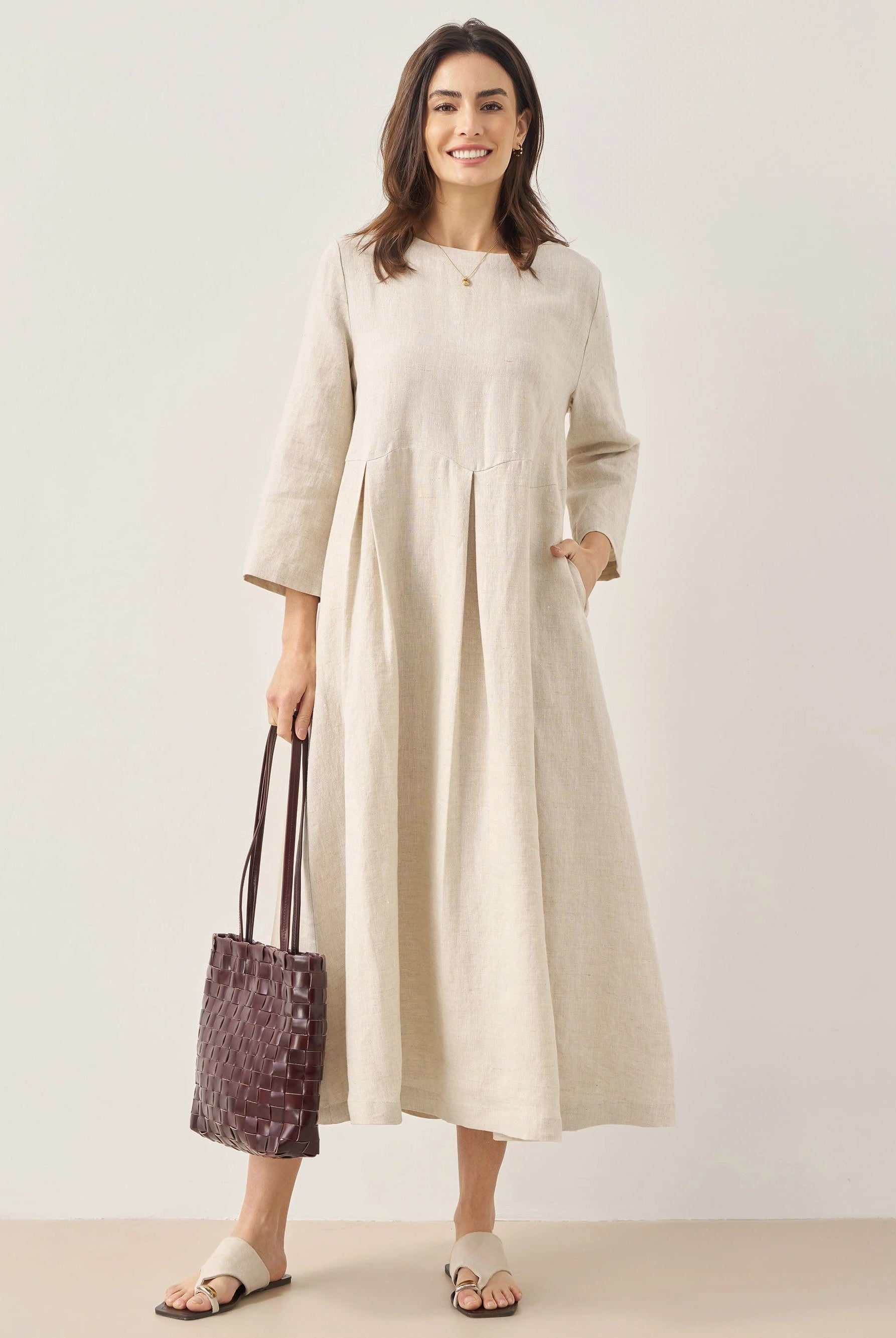
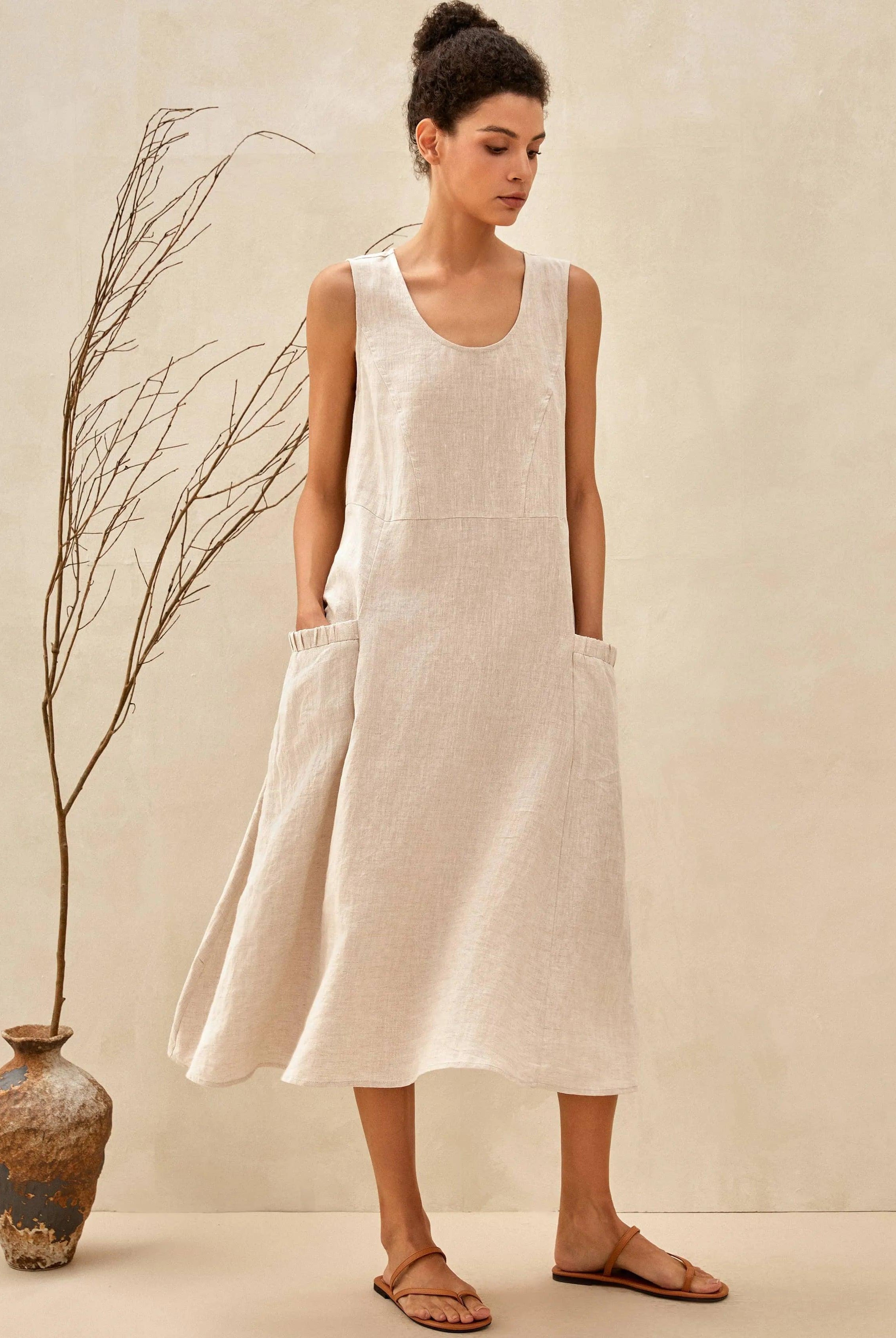
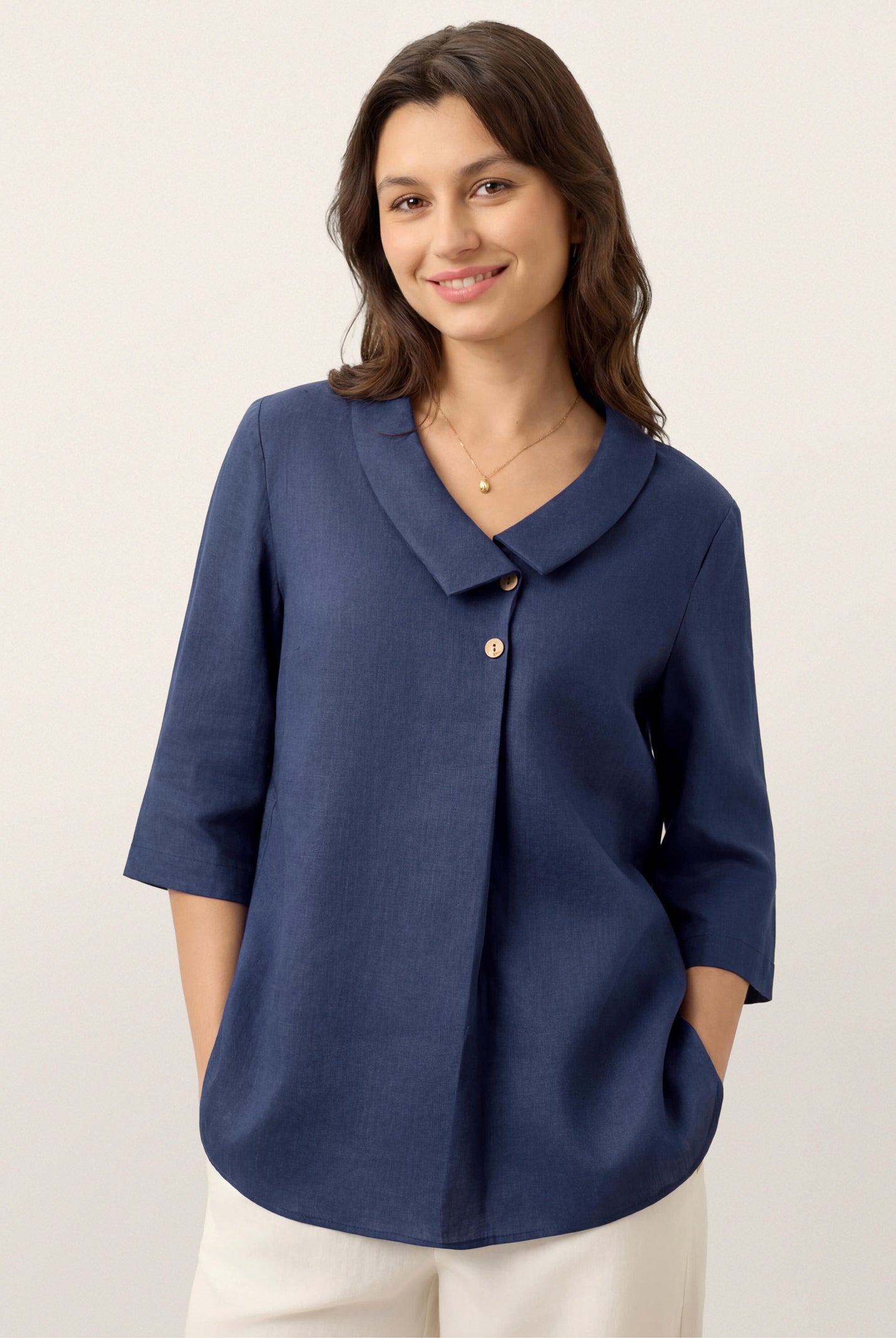
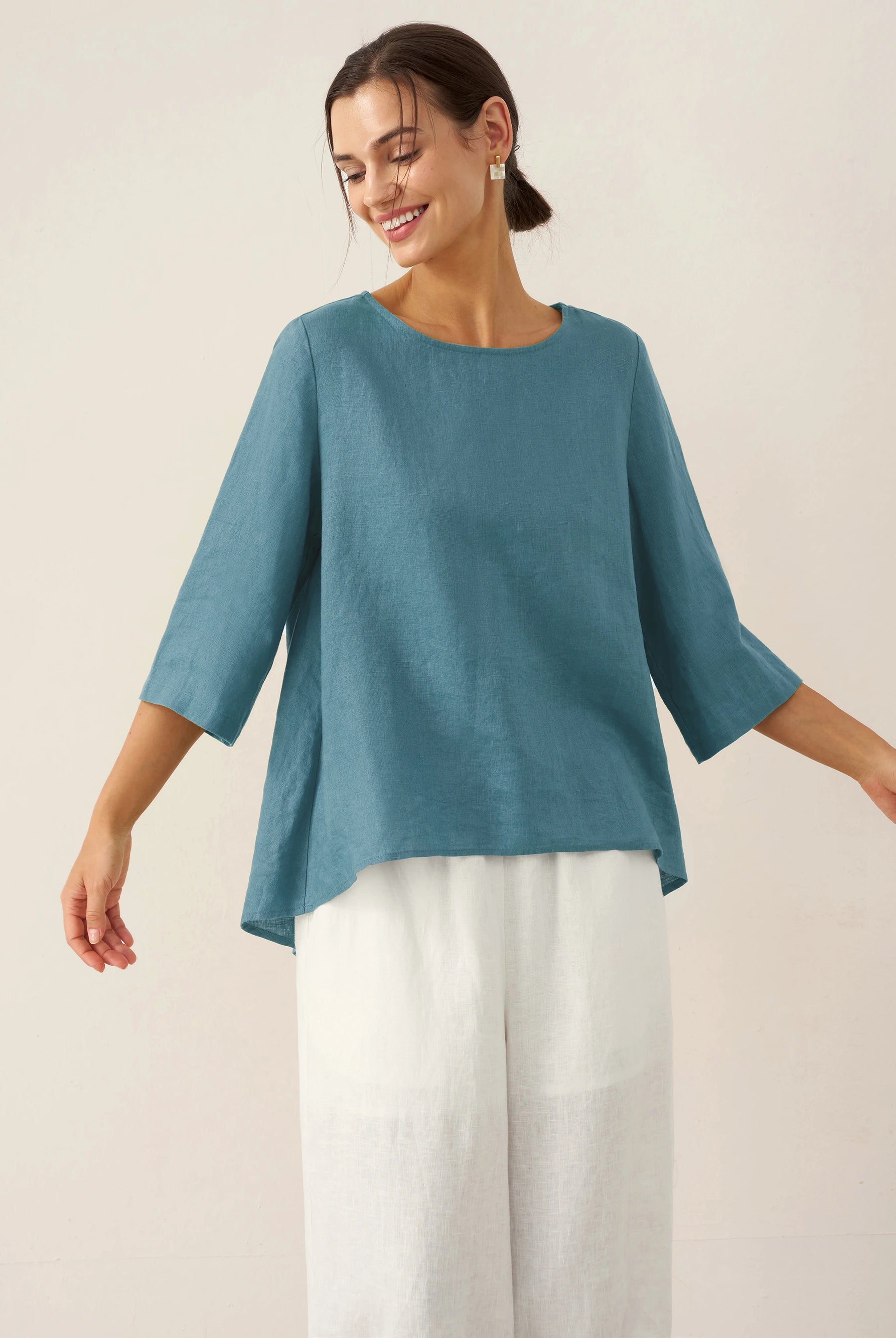
LOUELLA · $74.90
Tie waist and pintucks
Steam the body for a relaxed finish, then use the iron’s point from the wrong side if the square neckline or pintucks need definition. Remove or secure the detachable tie belt first and avoid flattening the texture.
Fabric: 100% European linen, 155 g/m². Sizes S–XXL were available when checked.
View LOUELLA
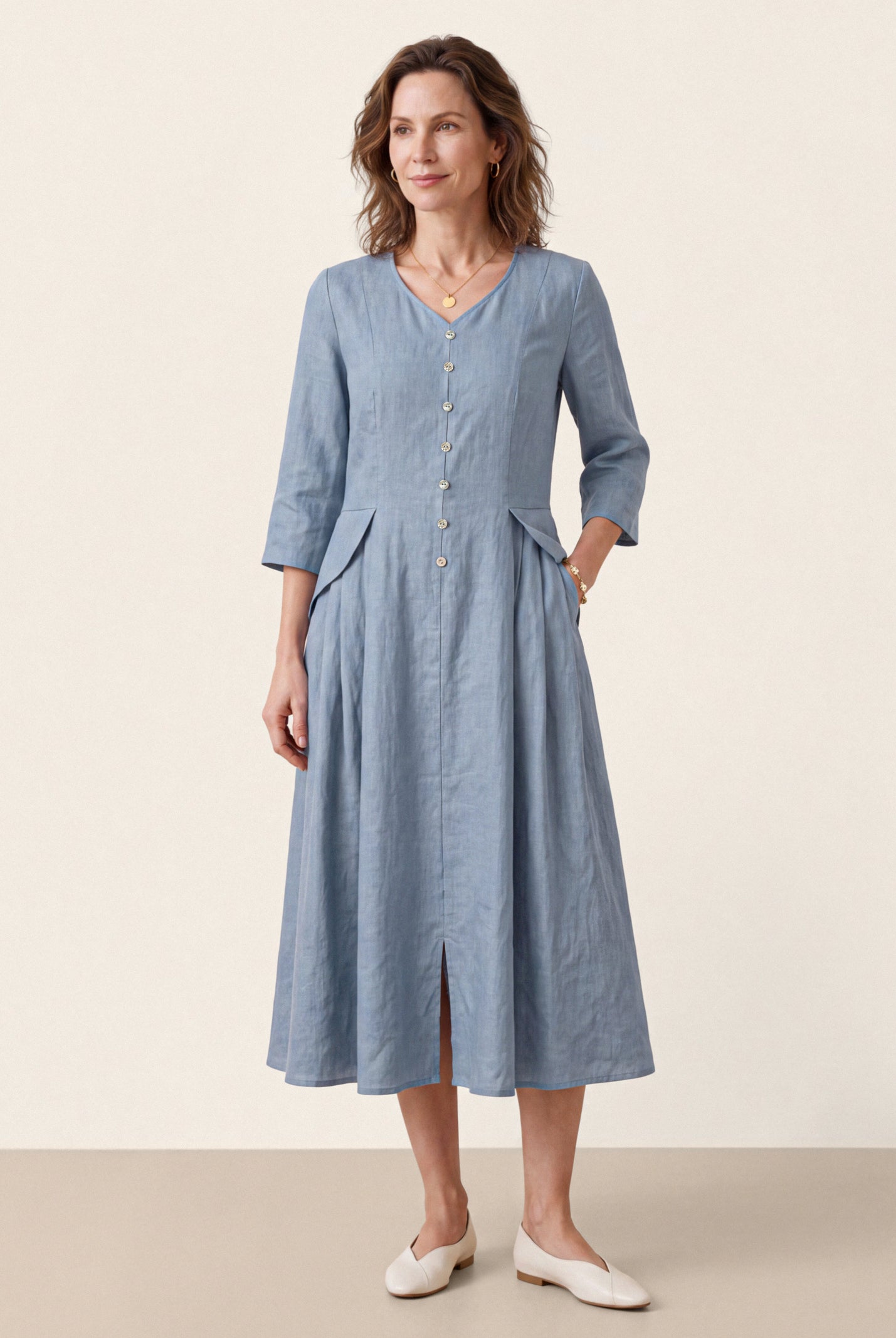
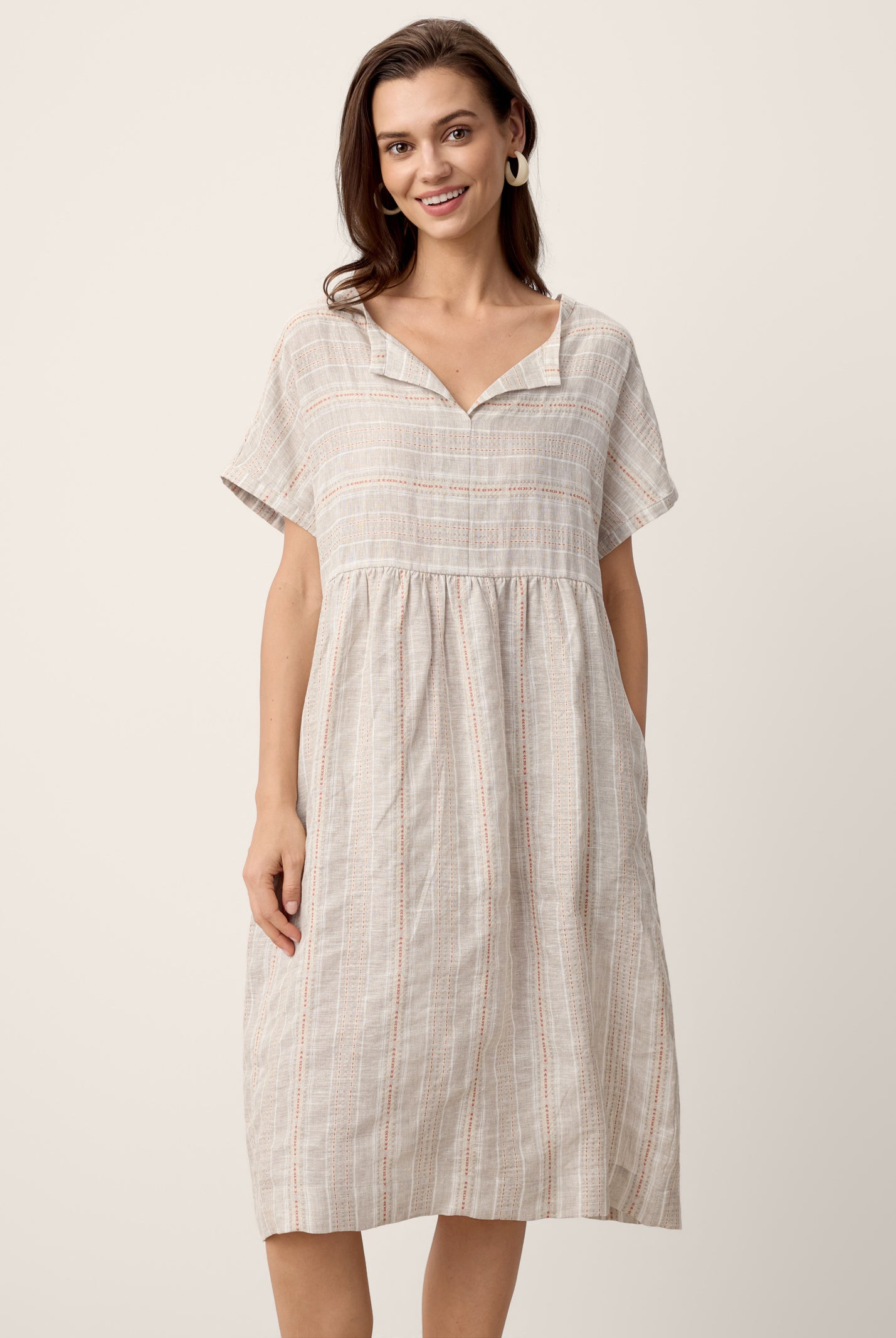
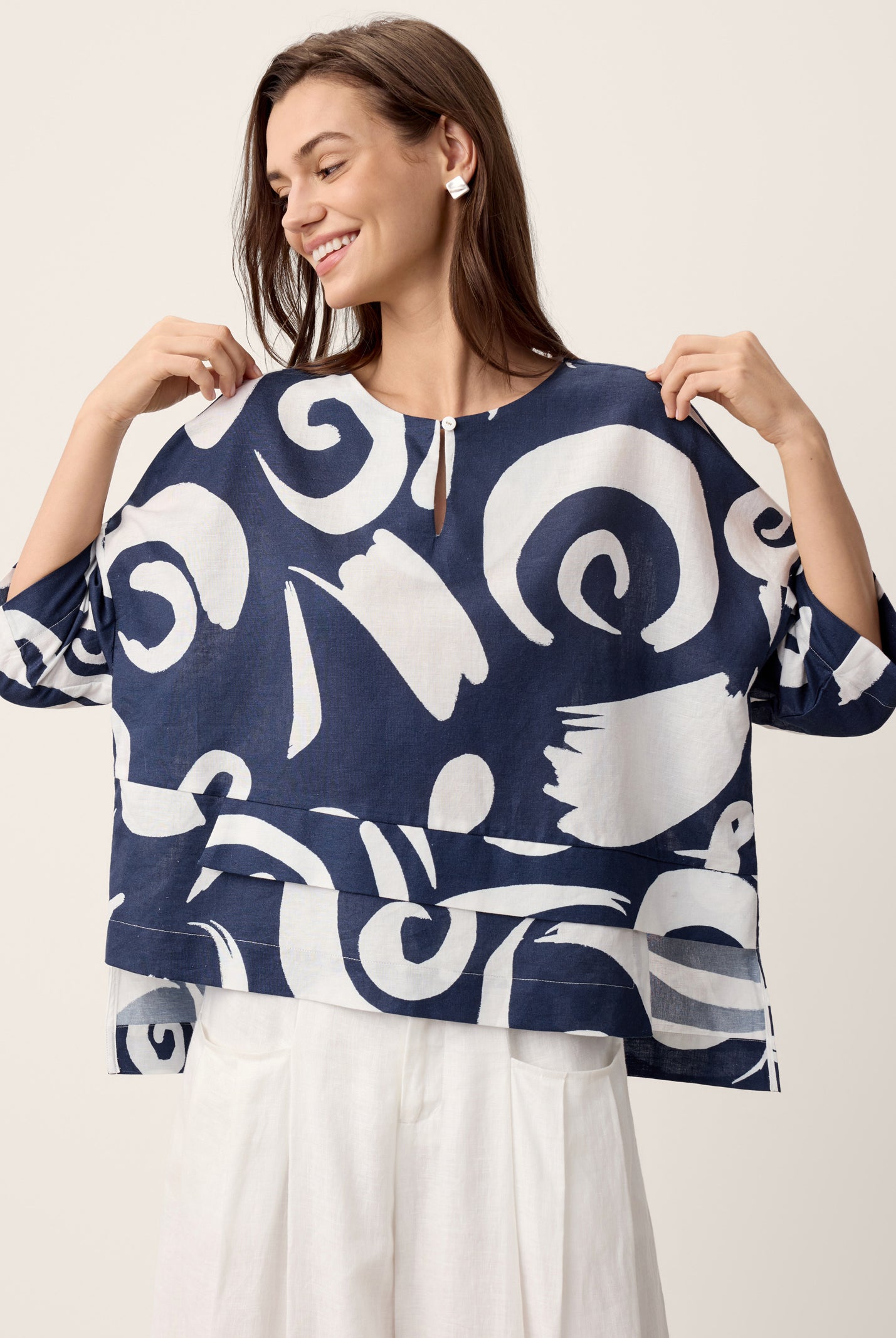
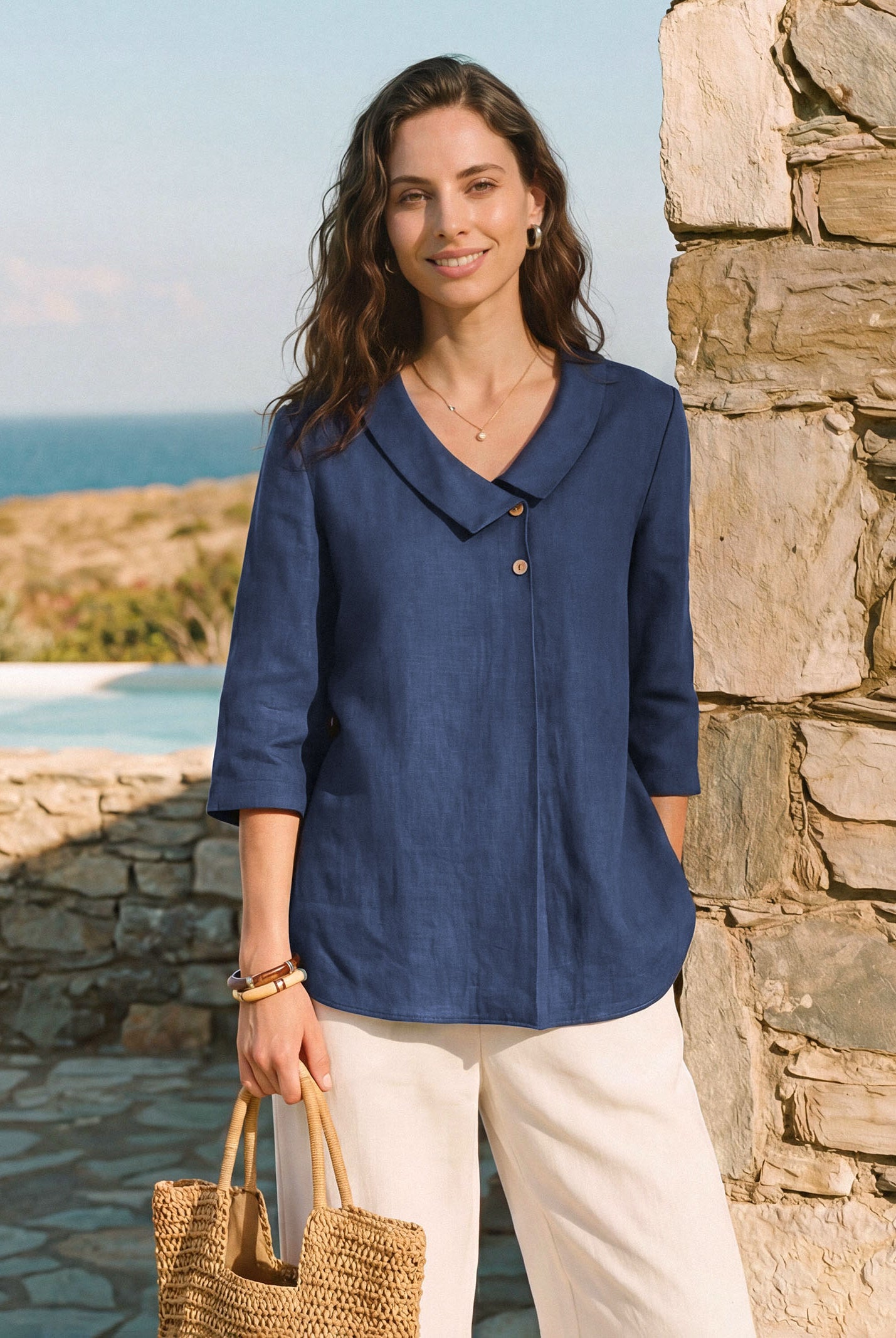
MALINA · $99.90
Lace insets and balloon sleeves
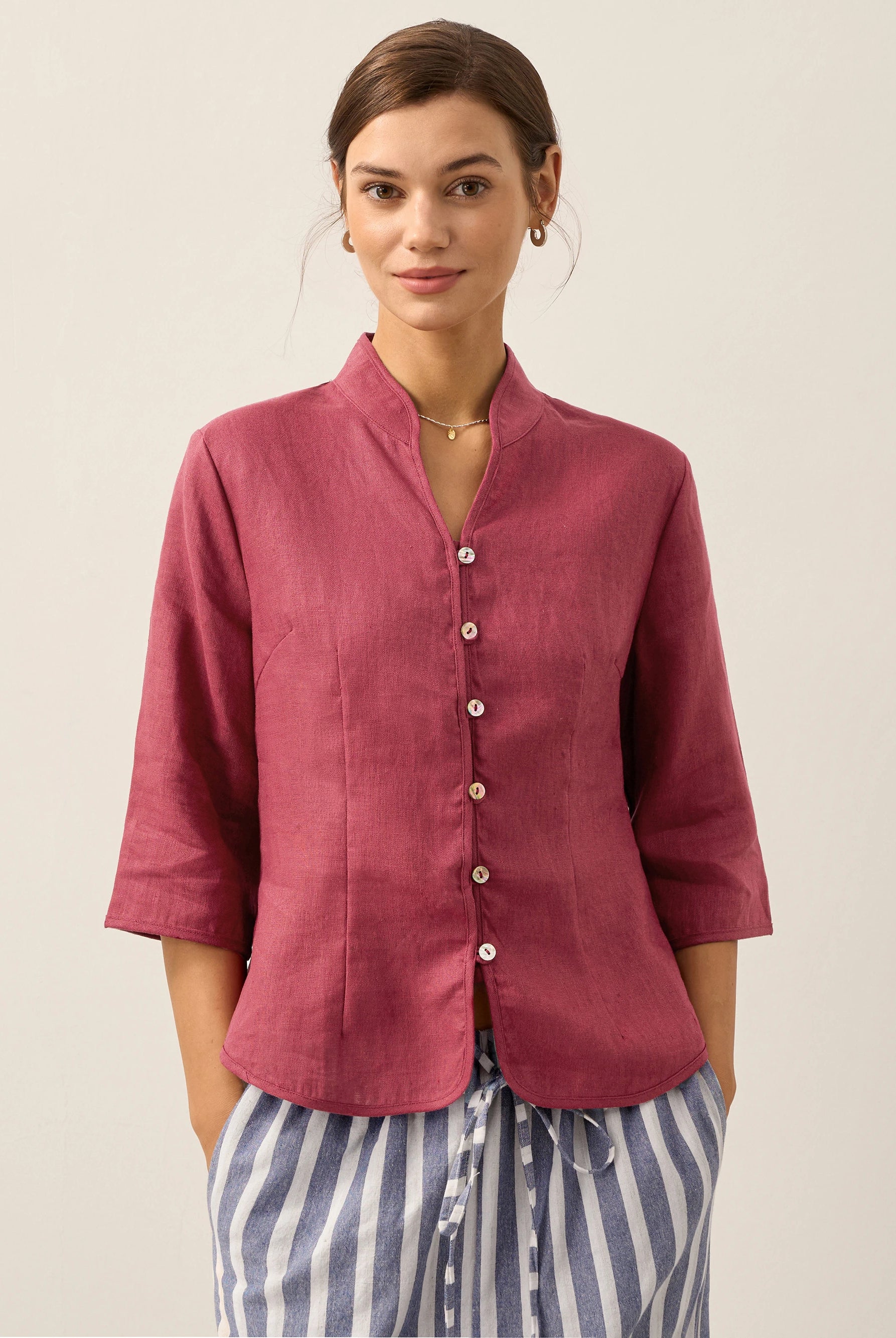
Steam is the easier first choice around balloon sleeves and gathered areas. If the placket needs a crisper finish, iron carefully from the wrong side without pressing directly over lace or shell buttons.
Detail: pintucks, lace inset panels, shell buttons, and elastic cuffs. S, M, and XXL were available; L and XL were sold out when checked.
View MALINA
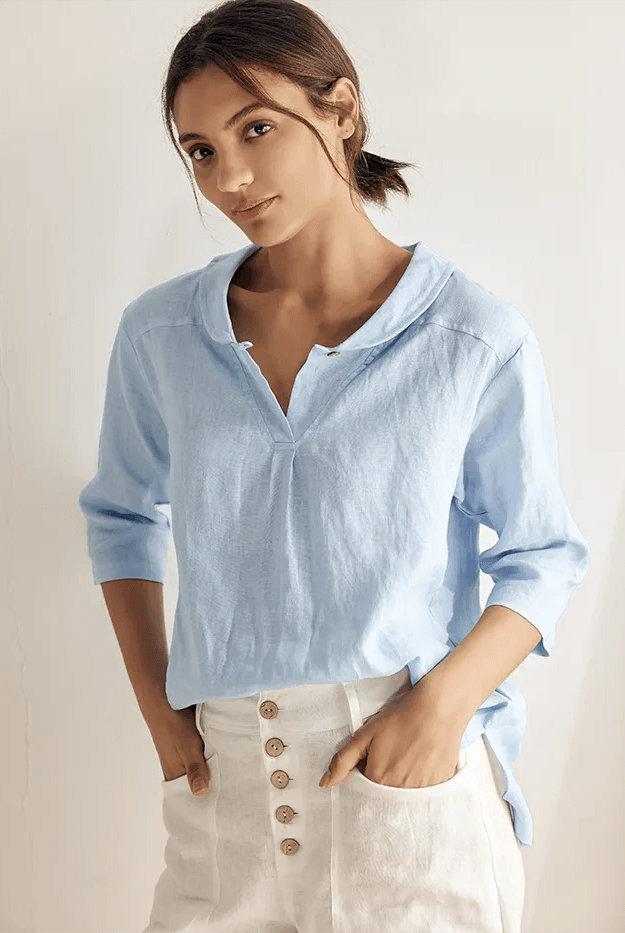
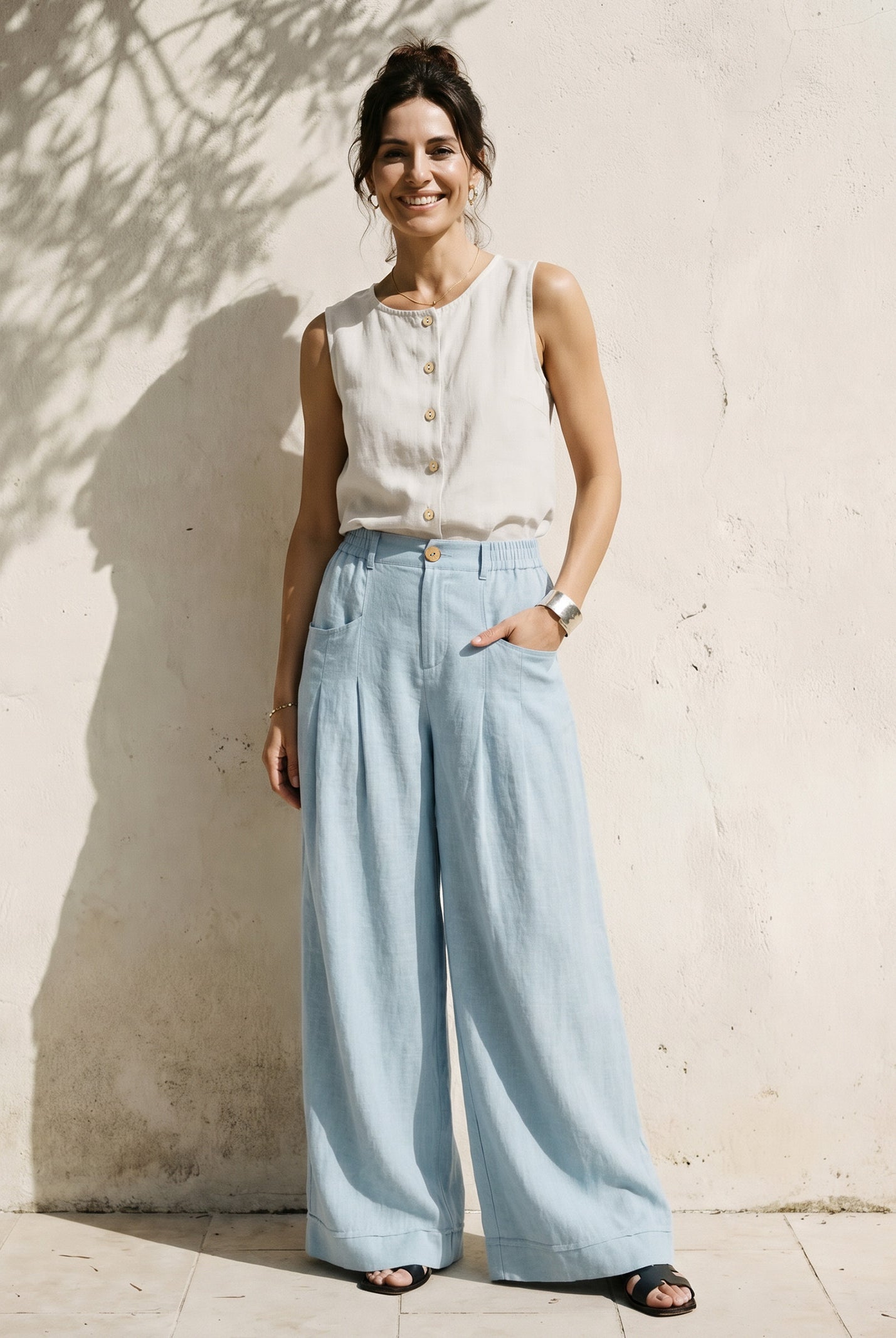
TABEA · $89.90
Dark color and shell-button slit
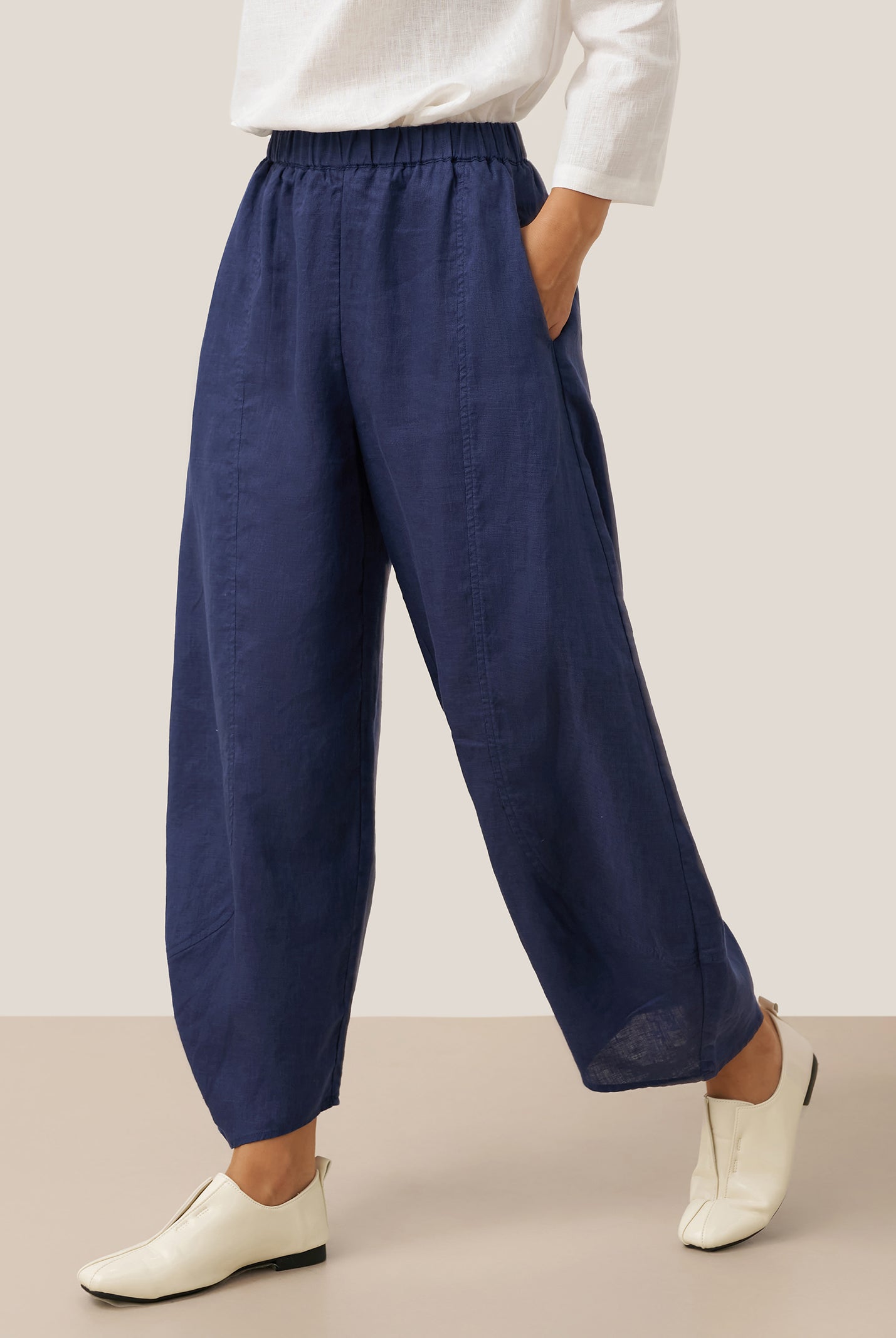
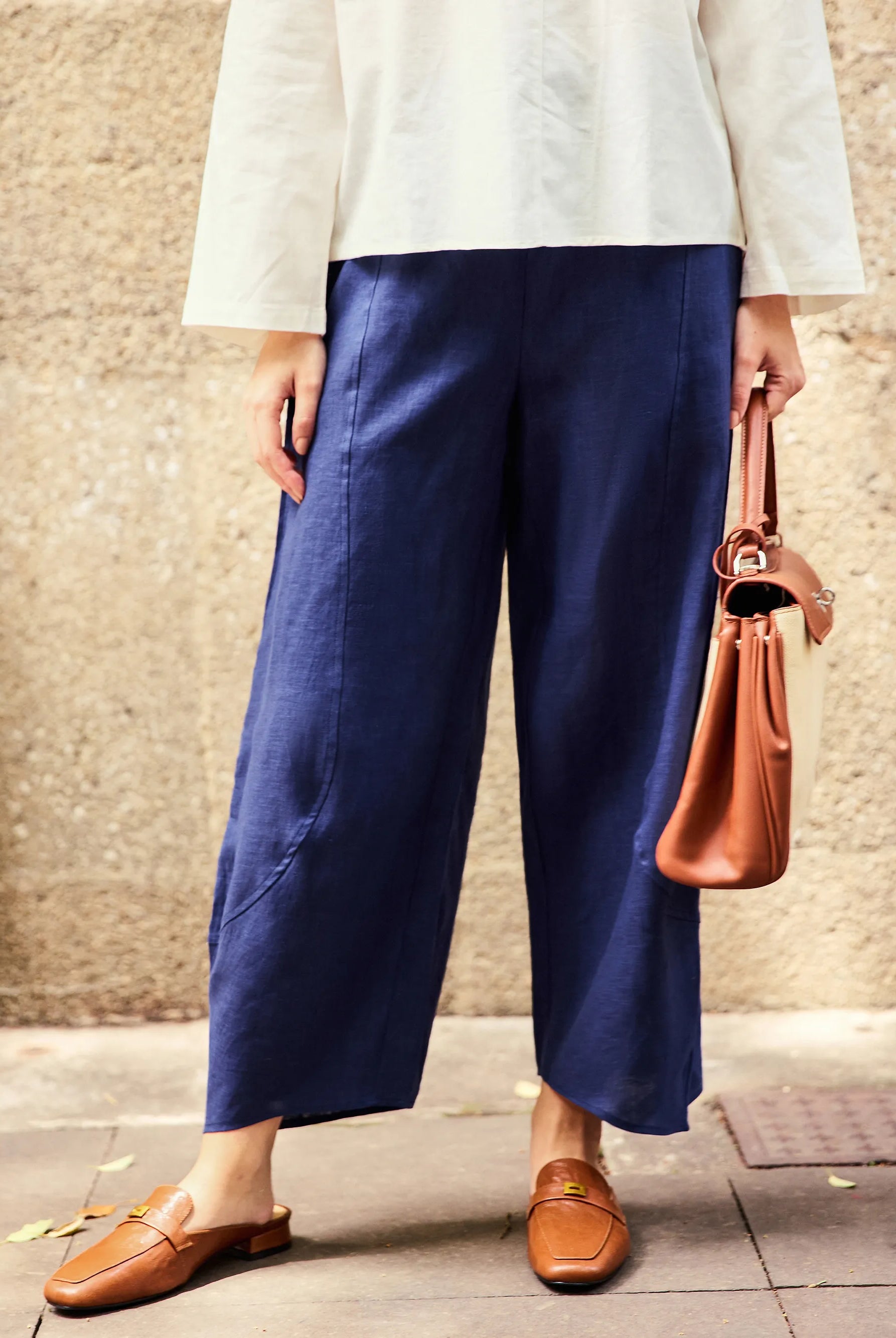
Turn the pants inside out before pressing. Steam can refresh the legs; controlled ironing is better for the structured front waist and hem. Keep direct heat away from the shell-button detail.
Fabric: 94% linen, 6% nylon, 160–165 g/m². Sizes S–XXL were available when checked.
View TABEASmall habits that protect the finish
Do
- Start with the care label and the lowest effective setting.
- Work on clean fabric; heat can set unnoticed marks.
- Use the wrong side for dark linen and test first.
- Let fabric cool and dry before folding or wearing.
Avoid
- High heat simply because the garment contains linen.
- Holding steam or an iron in one place for too long.
- Pressing directly over shell buttons, lace, elastic, or raised trims.
- Chasing every natural crease until the fabric looks unnaturally flat.
A care label outranks a general guide
Linen garments can include blends, interlinings, prints, embroidery, elastic, and decorative trims. If a garment label differs from general advice here or on a collection page, follow the garment label.
Frequently asked questions
Is it better to steam or iron linen?
Neither is universally better. Steam is convenient for a softly smoothed finish and shaped areas; an iron gives more control when you want crisp seams, collars, cuffs, or hems.
Can you steam 100% linen?
Often, yes, and LINTICO’s general care guide notes that steamers work well for hard-to-iron garments. Always confirm the individual garment label, test first, and follow the steamer manufacturer’s safety instructions.
Should linen be damp when ironing?
Slightly damp linen is generally easier to smooth, and LINTICO recommends ironing at medium heat preferably while the fabric is still slightly damp. Use the garment label to confirm the appropriate setting.
How do you iron dark linen without shine?
Turn it inside out, use the lowest effective heat, keep the iron moving, and test a hidden area. A clean pressing cloth can add another layer of protection if the care label permits ironing.
Can steaming shrink linen?
Shrinkage risk is more closely associated with excessive heat and care that conflicts with the label. Steam still involves heat and moisture, so avoid prolonged exposure and let the garment dry naturally after treatment.
Choose a linen piece for your preferred finish
Explore varied silhouettes and details across the current LINTICO Best Seller collection, then check each garment’s live care information before smoothing it.
Shop Best SellersCare guidance and product information checked August 13, 2026. Prices and inventory may change. Always follow the individual garment’s current care label and the appliance manufacturer’s safety instructions.